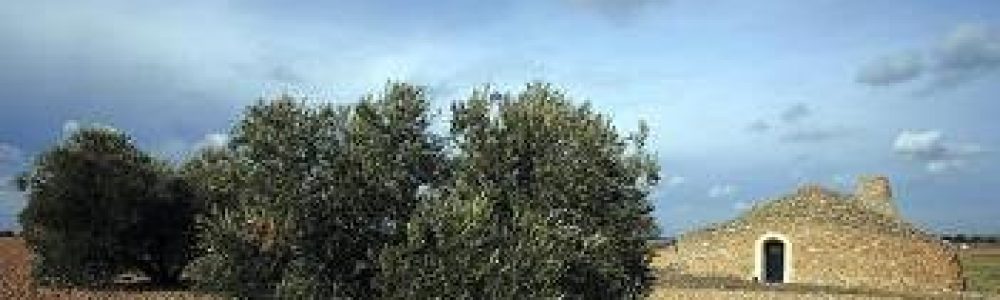
Hello, friends. This week, we’re taking a closer look at a unique construction near our Estate: the Manchego Bombo.
Throughout our country, we find typical constructions generically referred to as “vernacular architecture.” From the Pallozas of the Sierra de los Ancares (on the natural border between Castile and León and Galicia), to the Caserío, typical of the Cantabrian coast and the Pyrenees, passing through the Asturian Hórreo or the Valencian Barraca, and, of course, today’s protagonist, the Manchego Bombo. This structure was conceived as a refuge for farmers and shepherds, but also to shelter their animals and farming tools. However, Bombos were not only temporary dwellings for spending a few days in the countryside; sometimes, workers would spend the entire year in the bombo when they had to work all seasons in the same location.
The construction method of the false dome is based on the approximation of concentric rows of stone ashlar blocks that narrow as the height increases. This ensures that the pressure exerted by the weight of the vault is distributed vertically and not obliquely, as in a true vault. This constructive form reminds us of the Mycenaean tholos, such as the famous Treasury of Atreus tomb. Its interior layout typically consisted of stone seats, which served as beds, a space for animals, a fireplace, and a small niche. To build the Bombo, the farmers themselves reused local stone, which they grouped into “majanos” to select it, and then proceeded with the construction.
This reuse of local stone is what we aimed to achieve at Finca Luz de Alba when building the open-air showers you’ll find in each of our accommodations, contrasting with the rest of the building’s wall and breaking its horizontality.
We will find bombos scattered throughout the province, in Tomelloso, Socuéllamos, etc. Fortunately, some of them have been recovered, restored, and enhanced, and it is worth noting that these typical constructions are currently seeking to be declared a UNESCO World Heritage Site.