
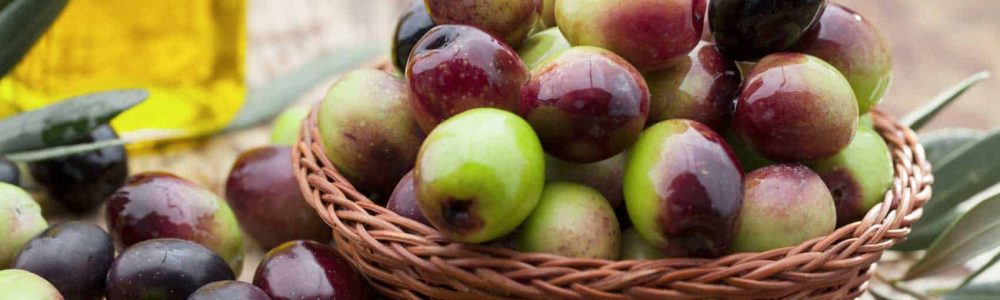
In this new post, we present the different olive varieties grown in Spain, as well as their main characteristics, growing areas, etc.
More than 260 olive varieties are grown in Spain. Each one contributes unique flavours and aromas. Discover their flavour and aroma characteristics, and learn to recognise them!
These are just some of the more than 260 varieties grown in Spain. We treasure a rich heritage that offers immense possibilities in the kitchen: Arbosana, Alfafara, Argudell, Arróniz, Bical, Callosina, Canetera, Carrasqueño de Alcaudete, Carrasqueño de la Sierra, Castellana, Changlot Real, Gordal de Hellín, Limoncillo, Llumeta, Lucio, Manzanilla de Hellín, Morrut, Ocal, Pajarero, Palomar, Pequeña de Casas Ibáñez, Pico Limón, Picual de Almería, Rojal de Tarragona, Royal de Calatayud, Vallesa, Vera, Verdial de Badajoz, Verdial de Cádiz, Verdial de Huévar, Villalonga… and many more. Discover them!
Arbequina
It is the characteristic variety of Catalonia (Tarragona and Lleida) and Upper Aragon, although its cultivation has spread to virtually the entire country. It takes its name from the town of Arbeca in Lleida.
It produces a very fluid, sweet oil in which bitter or pungent flavours are barely perceived. Its olive oil has a fruity aroma of olive, apple, banana and almond.
Hojiblanca
Its cultivation is mainly found in the provinces of Málaga, Córdoba, Granada and Seville. Its name refers to the whitish colour of the leaves. This variety is distinctive in that it is used both for oil production and as a table olive.
It is characterised by flavours and aromas of freshly cut grass, artichoke and aromatic plants. It enters the palate sweetly, with a light bitterness and a final pungency that is very localised in the mouth.
Cornicabra
This type of olive is the second Spanish variety in terms of cultivated area. It is found mainly in the provinces of Toledo, Ciudad Real and Madrid, although it is also grown in the provinces of Cáceres and Badajoz. Its name refers to the curved shape of the fruit, reminiscent of a goat’s horn.
Its extra virgin olive oils are highly aromatic, with fruity notes of olive and other fruits, especially apple. On the palate, herbaceous notes of olive leaf are perceived, with a slight bitter taste.
Picual
It is the most abundant variety in Spain and in the world. At present, around 900,000 hectares of production area in our country are mainly located in Jaén, Córdoba and Granada, although its cultivation has spread to other producing areas such as Castilla-La Mancha. Its name refers to the beak-like shape of the fruit.
Its oil is highly valued for its high stability (resistance to oxidation), which gives it excellent resistance to high cooking temperatures and makes it ideal for preserving raw or cooked foods.
From a sensory perspective, these are oils with great character, full-bodied and with green olive fruitiness, with olive leaf notes in the flavour, a slight pungency and bitterness.
Picudo
It is one of the great Andalusian varieties, with a significant presence in the provinces of Córdoba, Granada, Málaga and Jaén. Although its name is similar, it is clearly different from picual. It takes its name from the pronounced nipple formed at the end of the fruit.
This variety produces highly aromatic oils. It is characterised by a green fruity flavour with notes of green apple and olive leaf.
Empeltre
One of the varieties that has expanded the most across our country. Although it is typical of Aragon, it is also grown in the Balearic Islands, Castellón, Tarragona and Navarre. Its name derives from the Catalan word “empelt”, used to refer to grafts.
It produces sweet oils, with light bitterness and pungency and a high fruitiness, in which the flavours of green apple and almond are clearly perceived.
Royal
This is a native variety from the province of Jaén, although its cultivation is limited to the Sierras del Norte area of the province. It offers oils that contrast with those produced by the province’s predominant variety, picual. These are sweet yet very fruity oils, in which fig tree notes predominate.
Sevillenca
A variety whose cultivation is concentrated in the provinces of Tarragona and Castellón. An olive that produces sweet, very fruity virgin olive oils, with little bitterness and a noticeable pungency. Notes of green apple and banana dominate its flavour.
Lechín de Sevilla
This is one of the most widespread varieties in Andalusia, with a strong presence in the province of Seville, although it is also grown in Córdoba, Cádiz and Málaga. The extra virgin oils from this variety stand out for their balance of green notes, pungency and bitterness. They are highly fruity oils.
Aloreña
A variety typical of the province of Málaga. Its oil has a light green colour, with an aroma dominated by green fruit and grass.
Blanqueta
A Levantine variety, its cultivation is especially important in the province of Alicante, although it can also be found in Valencia, Murcia and Albacete. Its name comes from the milky tone of its olive. These oils stand out for their high fruitiness, intense pungency and pronounced bitterness.
Farga
This variety is mainly grown in Castellón, Tarragona and, to a lesser extent, in Lleida. Its extra virgin oils are characterised by an intense flavour, with notes reminiscent of almond and walnut.
Lechín de Granada
In addition to Granada, this variety is also grown in Almería, Albacete and Murcia. It produces extra virgin oils with a distinctive sweet flavour.
Manzanilla Cacereña
A variety typical of Extremadura (grown in both Cáceres and Badajoz), it has also extended its cultivation to Salamanca, Ávila and Madrid. Its oil offers a balance of pungent, bitter and sweet notes and a high green fruitiness reminiscent of freshly cut grass, as well as fruitiness of green apple, fruit salad and tomato plant.
Morisca
The cultivation of this variety is concentrated mainly in the south of the province of Badajoz and the north of the province of Seville. It produces sweet, very fruity oils.
Verdial de Vélez-Málaga
As its name indicates, it is a native variety from the province of Málaga that offers smooth extra virgin oils, slightly pungent and with high fruitiness. It stands out for its flavour of ripe fruit.
Alfafara
An olive variety that takes its name from the town of Alfafara in Alicante. In Spain’s Levante, it is also known as alfafarenca. In addition to its province of origin, it is grown in Valencia and Albacete. This variety produces virgin olive oils in which bitterness and pungency are in perfect balance. On the nose, it stands out for notes of banana and ripe tomato.
Morrut
An olive variety closely linked to the Baix Ebre-Montsiá region, on the border between the provinces of Castellón and Tarragona, where it is also known as morruda. It is one of the varieties recognised under the Oli del Baix Ebre-Montsiá Designation of Origin, together with sevillenca and farga. It offers very fruity virgin oils, with noticeable pungency and light bitterness. This variety is dominated by flavours of almond and green apple.
Verdial de Badajoz
This typically Extremaduran variety (grown in both Badajoz and Cáceres) is one of the many verdial varieties found across Spain’s olive-growing regions, differentiated by reference to the growing area. Verdial de Badajoz offers virgin oils with medium-to-high fruitiness. On the palate, it stands out for notes of almond and ripe fruit. It has a light bitterness, with a more pronounced pungency. This is a slightly sweet oil.
Changlot Real
A typically Levantine variety, it concentrates its production in the Valencian Community. It is the origin of very fruity virgin olive oils, with intense pungency and a more nuanced bitterness. It stands out for green notes and the presence of hints of apple, wood and almond. This variety is one of those recognised for producing extra virgin olive oils protected by the Valencian Community Designation of Origin.
Manzanilla de Sevilla
It is one of the main table olive varieties in our country. The province of Seville accounts for the bulk of its cultivation, although it can also be found in Huelva and Badajoz. It is also used to produce oils characterised by medium fruitiness, with light pungency and bitterness. It also stands out for aromas of grass, almond and fig tree.
Castellana
A variety originating in Castilla-La Mancha, from which it appears to have inherited its name. It is mainly grown in the provinces of Guadalajara, Cuenca and Madrid. It is the only variety accepted for producing extra virgin olive oils under the Aceite de la Alcarria Designation of Origin. The oils from this variety are fruity and highly aromatic, with a characteristic pungency. They also stand out for green notes of grass and leaf, as well as banana.
Verdial de Huévar
A variety closely linked to the province of Huelva, although it is also grown in producing areas of the neighbouring provinces of Seville and Cádiz. In fact, it is one of the varieties permitted under the Sierra de Cádiz Designation of Origin. Its virgin oils are highly fruity, with intense pungency and bitterness. It also stands out for its green notes, with a clear flavour of green almond and fig tree.
Villalonga
This is the flagship variety of the Valencian Community, as it can be found in both the province of Valencia and Alicante. In Spain’s Levante, it is also known as manzanilla. It produces extra virgin oils with intense fruitiness, with light pungency and bitterness. It also stands out for notes of freshly cut grass, almond and apple.
Gordal Sevillana
This is, without a doubt, one of the most famous olive varieties in the world. Gordal sevillana is mainly used for table olives, where it stands out for its large size, which sets it apart from other varieties. It is mainly grown in Seville, although it has successfully spread to other areas of the country. It is not usually used for oil production, as its fat yield is very low.
Source: www.aceitesdeolivadeespana.com

